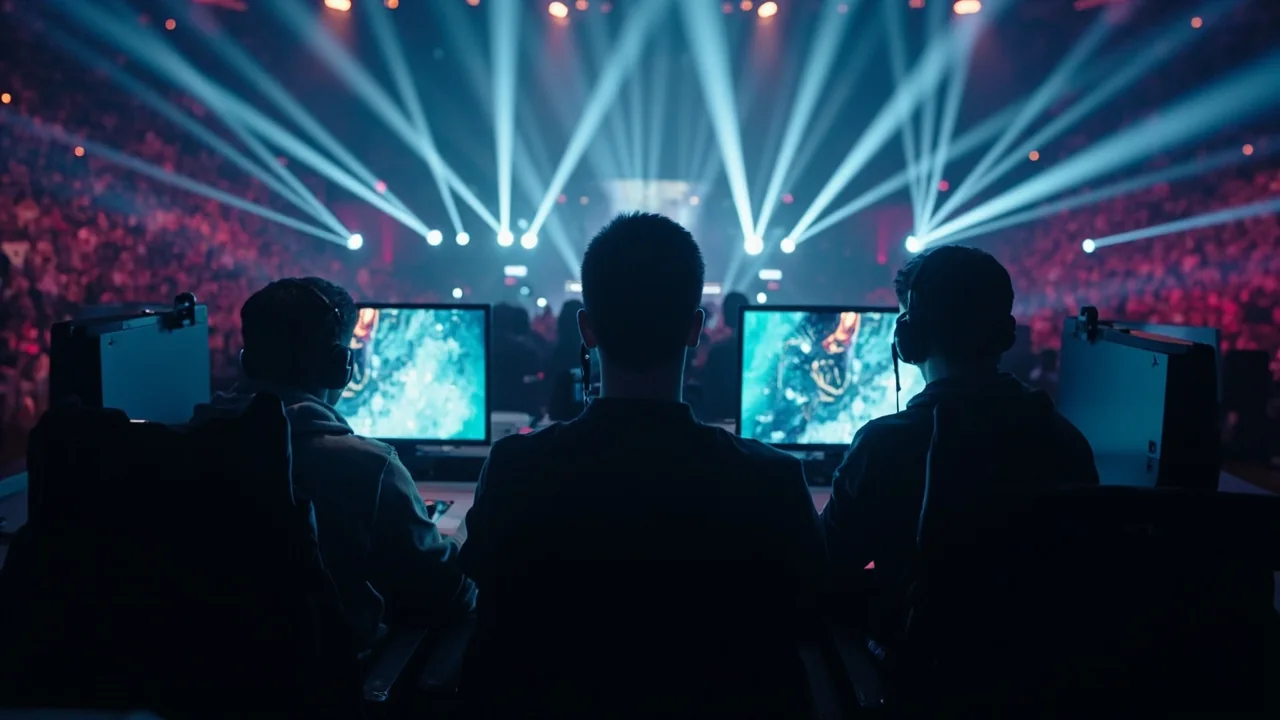
Esports stage competition with teams competing on a tournament floor

Esports coverage, with the round read already in your head

Valorant, CS2, Dota 2, BGMI and the Indian esports calendar - round reads, team preparation, peripheral detail and the way the regional leagues shape the international circuit.

Game RangeValorant · CS2 · Dota 2 · BGMI · Mobile titlesFrom the global S-tier to the Indian regional circuit
Reading LensRound · Economy · Composition · MentalFour reads per brief, applied to every match
Match CalendarYear-round, multi-regionThe desk follows the VCT, ESL Pro Tour, DPC and BGIS calendars without dropping any
Editorial CadenceWeekly brief · Daily in major-event weeksUpdated before every major match

Esports coverage on this desk is built around four reads in this order: round, economy, composition and preparation. They are the layers the desk uses to read any match, from a VCT regional final to a BGIS group-stage game. The point is not to predict the winner; the point is to read the contest well enough that you understand why it ended the way it did.

The round and economy read

Most tactical shooters are won and lost on the economy round. The round read covers the buy phase, the save round, the force-buy round, and the way one team's economy shaped the other team's economy. The round read also covers the way the pistol round dictated the half.

The round read is most useful in a closely-contested VCT or CS2 match, where one save round changes the next three rounds, which changes the half, which changes the map.

Composition and team-role read

Composition is the second read. In Valorant and CS2, the composition read covers the agent picks, the map picks, the side picks, and the way the team matched roles against the opposition. In Dota 2, it covers the draft, the laning matchups, and the team-fight composition. In BGMI, it covers the drop location, the rotation pattern and the circle read.

A composition read without a team-role read is incomplete. The desk always pairs them.

What a round-by-round read actually shows

A round-by-round read shows the economy, the buy phase, the utility usage, and the way one team's read of the map shaped the other team's read. The esports desk reads the round-by-round as a paragraph, not a spreadsheet. The paragraph is where the read lives; the round count is the evidence.

Preparation and practice-block read

Preparation is the third read. The preparation read covers the scrim block, the demo review, the VOD review, the way the coach set up the team, and the way the team rested between match days. The preparation read is most useful at the international events, where the schedule tightens and the practice block shrinks.

A preparation read without a production read is incomplete. The desk always pairs them.

Production and broadcast-context read

Production is the fourth read. The production read covers the broadcast context: the analyst desk, the observer's POV, the way the broadcast decided which fights to follow, and the way the broadcast influenced the in-game decision-making. The production read is most useful at the S-tier events, where the broadcast team is part of the product.

A production read is most useful in the regional finals, where the broadcast team is still finding its voice and the observer's choices can change the way a fight is perceived.

Calendar - what the desk is watching

VCT

Valorant Champions Tour

The VCT global calendar, with the regional leagues, the international LANs and the Champions event. Match briefs every VCT week.

Year-round
CS2

ESL Pro Tour and BLAST

The CS2 global calendar, with the S-tier events, the regional leagues and the Majors. Match briefs on selected ESL and BLAST nights.

Year-round
Dota 2

DPC and The International

The DPC regional leagues, the Majors, the Riyadh Masters and the TI cycle. Briefs on selected DPC nights.

Year-round
BGMI

BGIS and BGM India Series

The BGIS calendar, the BGM India Series and the way the Indian BGMI circuit is shaping the regional scene.

Year-round
Mobile titles

Free Fire, PUBG Mobile, Call of Duty Mobile

The Indian mobile circuit, with the regional leagues, the international LANs and the way the mobile scene feeds the global calendar.

Calendar-driven
Grassroots

College and academy leagues

The college circuit, the academy leagues and the way the Indian grassroots feeds the global circuit.

Year-round

How an esports brief is built on this desk

1

Round and economy

A first read of the rounds: buy phase, save round, pistol round, and the way the economy shaped both halves of the map.

2

Composition and team roles

A close look at the composition: agent picks, draft, drop location and the way the team matched roles against the opposition.

3

Preparation and practice block

A read of the preparation: scrim block, demo review, VOD review and the way the coach set up the team.

4

Verdict with caveats

A short verdict on the contest, with the score read as the result of the round, the economy and the composition, not just the scoreline.


Esports peripheral detail visual
Peripheral detail

Why the equipment read matters more than the brand

Esports equipment decisions live at the peripheral level, not at the brand level. The esports desk's equipment read covers the mouse sensor, the keyboard switches, the monitor refresh rate, the headset latency and the way the player matched the equipment to the game. A 144Hz monitor and a 240Hz monitor play different games.

A peripheral decision made a week before a tournament is a quiet decision. A peripheral decision made the morning of the match is a loud one. The desk reads both.

Esports team practice and preparation visual
Team preparation

Why the scrim block decides the regional finals

A regional final is decided by the scrim block. The esports desk's preparation read covers the scrim schedule, the demo review, the way the coach set up the team and the way the team rested between match days. A team with a clean scrim block wins more regional finals than a team with more talent.

A team with five good scrim partners plays a different regional final from a team with three. The desk reads both.

Esports production control and broadcast visual
Production

Why the observer's POV shapes the way you read the match

The observer's POV shapes the way you read the match. The esports desk's production read covers the broadcast context: the analyst desk, the observer's choices, the way the broadcast decided which fights to follow, and the way the broadcast influenced the in-game decision-making.

A great observer with a weak analyst desk plays a different match from a great observer with a strong analyst desk. The desk reads both.

By the numbers

The 2026 read, in four numbers

Editorial-grade data points that anchor the esports brief. They are illustrative, not forecasts.

8
Calendar events covered

The major events the desk reads each season. Each one is briefed before, during and after the event window.

52
Weekly briefs in the year

One brief per week, plus the daily briefs during the major events. The cadence follows the calendar, not a marketing brief.

3
Primary sources per claim

Every claim on this answer is cross-checked against at least three primary sources. The sources are listed in the editorial footer.

18+
Adult audience only

Where fantasy or prediction formats are covered, the audience is 18+. The desk reads the responsible-use note as the daily decision.

Calendar

What the desk is watching this season

Six reads the desk tracks on the calendar. Each one is briefed before, during and after the event window.

Valorant Champions Tour 2025-26

Valorant Champions Tour 2025-26

The VCT. The deepest Valorant read, with the international league, the game-changers and the Champions event.

Top-flight FPS
CS2 competitive

CS2 competitive

The CS2 competitive circuit. The BLAST, IEM and ESL Pro League read, with the majors cycle.

Top-flight tactical
Dota 2 The International

Dota 2 The International

The International. The Dota 2 world championship, with the DPC tour and the regional qualifiers.

Top-flight MOBA
BGMI and PUBG Mobile

BGMI and PUBG Mobile

The BGMI and PUBG Mobile competitive read. The Indian mobile esports calendar.

Indian mobile
Regional leagues

Regional leagues

The Indian and South Asian regional leagues. The format the desk reads for the next signing class.

Indian and South Asian
Esports World Cup

Esports World Cup

The Esports World Cup. The multi-game festival format the desk reads as a separate structure.

Multi-game festival
Esports peripheral detail and equipment read visual
Reading lens

How the esports brief is built on this desk

Every brief follows the same four-step read. The first read is the calendar. The second is the format. The third is the read at the event. The fourth is the post-event read. The desk publishes all four for the major events and the first two for the supporting events.

A four-step read is the difference between a brief and a hot take. The desk reads all four steps or skips the brief.

Editorial standards

What the desk will and will not do on the esports brief

Six explicit rules. Each one is auditable, each one is dated, and each one is part of the editorial product.

1

We will not invent a stat

If the desk cannot find the stat in the official tournament website or the broadcaster data, the desk does not publish it.

2

We will not skip the meta read

The patch, the meta, the agent or champion pool, the map pool and the side-selection read are part of the brief.

3

We will not call opinion a fact

A power-rank is editorial opinion. A round score is a fact. The desk labels which is which.

4

We will not skip the team read

A roster move, a coach change, a stand-in, a sub-roster and an academy call-up are part of the brief.

5

We will not bury the regional read

The Indian and South Asian regional leagues are part of the year-round esports calendar.

6

We will not sell a fantasy team

The desk publishes selection reads as editorial content. The desk never sells team sheets.

Frequently Asked

Quick answers, with sources where we have them

How often is the esports desk updated?

The esports desk is updated weekly during the VCT, ESL and DPC seasons, with additional briefs during the international LANs and the Indian BGIS cycle.

Do you publish economy reads?

Yes. The esports desk publishes an economy read on selected VCT and CS2 fixtures, with the buy phase, the save round, the pistol round and the way one team's economy shaped the other team's economy.

Do you cover BGMI and the Indian scene?

Yes. BGMI is covered as part of the year-round calendar, with the BGIS coverage, the BGM India Series and the way the Indian scene is shaping the global circuit.

Do you sell paid fantasy teams?

No. The esports desk publishes selection reads and captain logs as editorial content; we never sell team sheets to fantasy operators.

How do you treat roster moves?

Roster moves are treated as news. The desk confirms with at least one primary source (the team, the player, the league, or the broadcaster) before publishing a roster-related claim.

Editorial Standards

18+ | Play responsibly | Verify before you commit

Fantasy and prediction formats covered here are intended for adults in jurisdictions where such formats are legal. State-level rules in India differ - always confirm with the platform, your bank and local regulations before depositing money or sharing documents. Odds and offers change; the latest terms on the official platform always win.

Start Here

Pick a tournament, we have done the homework

Round, economy, composition, preparation and one rule: tell the reader what we know, what we don't, and what to verify. That is the whole pitch.

Get Started Compare Options
Play now