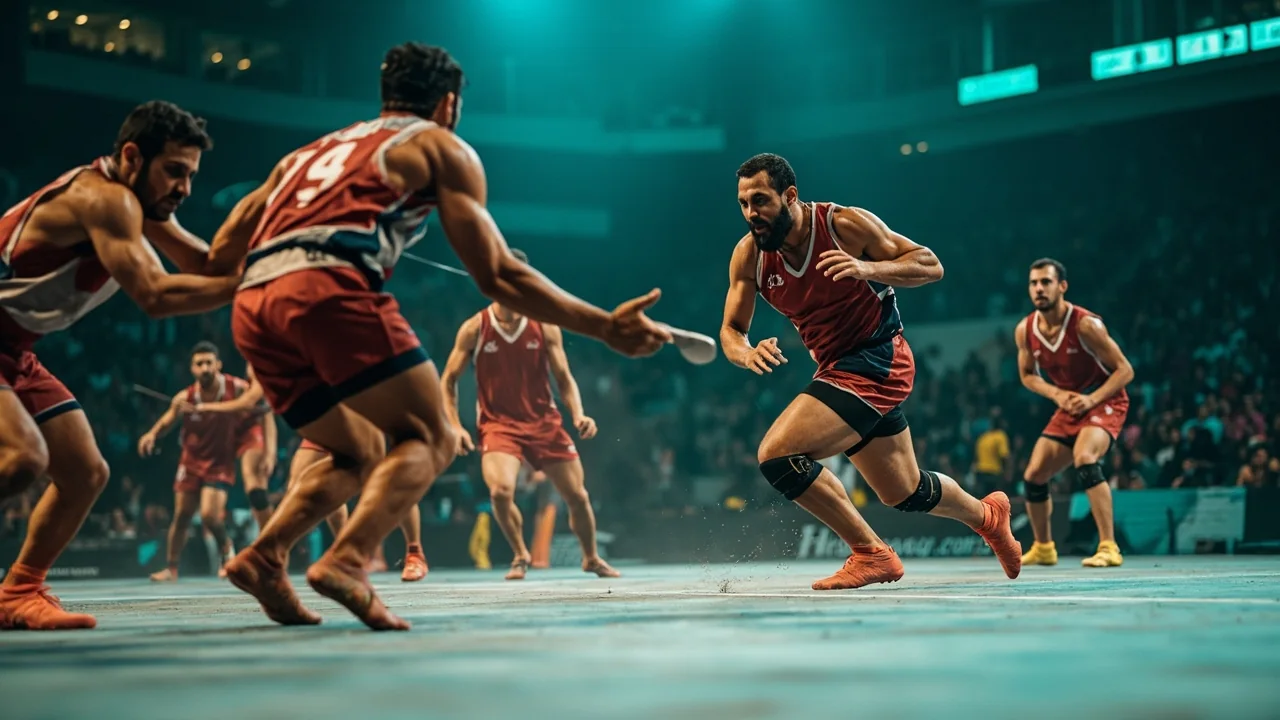
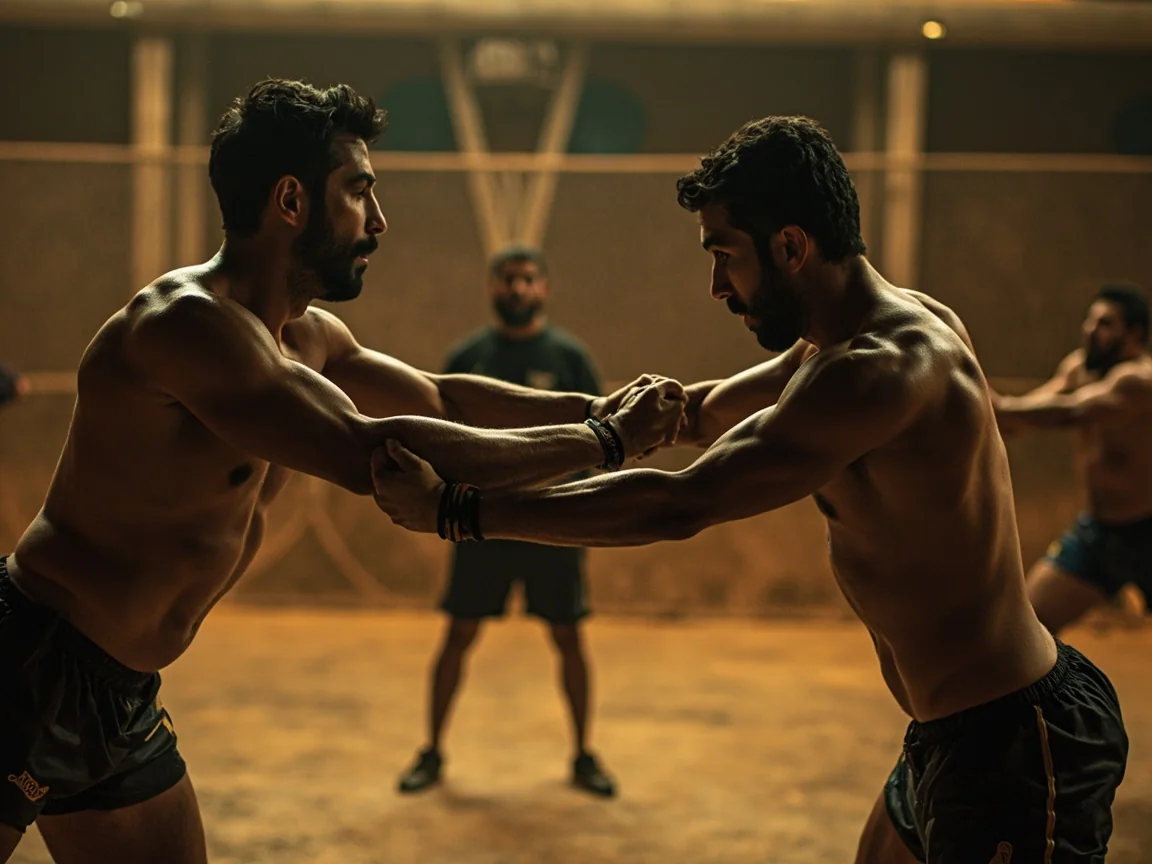
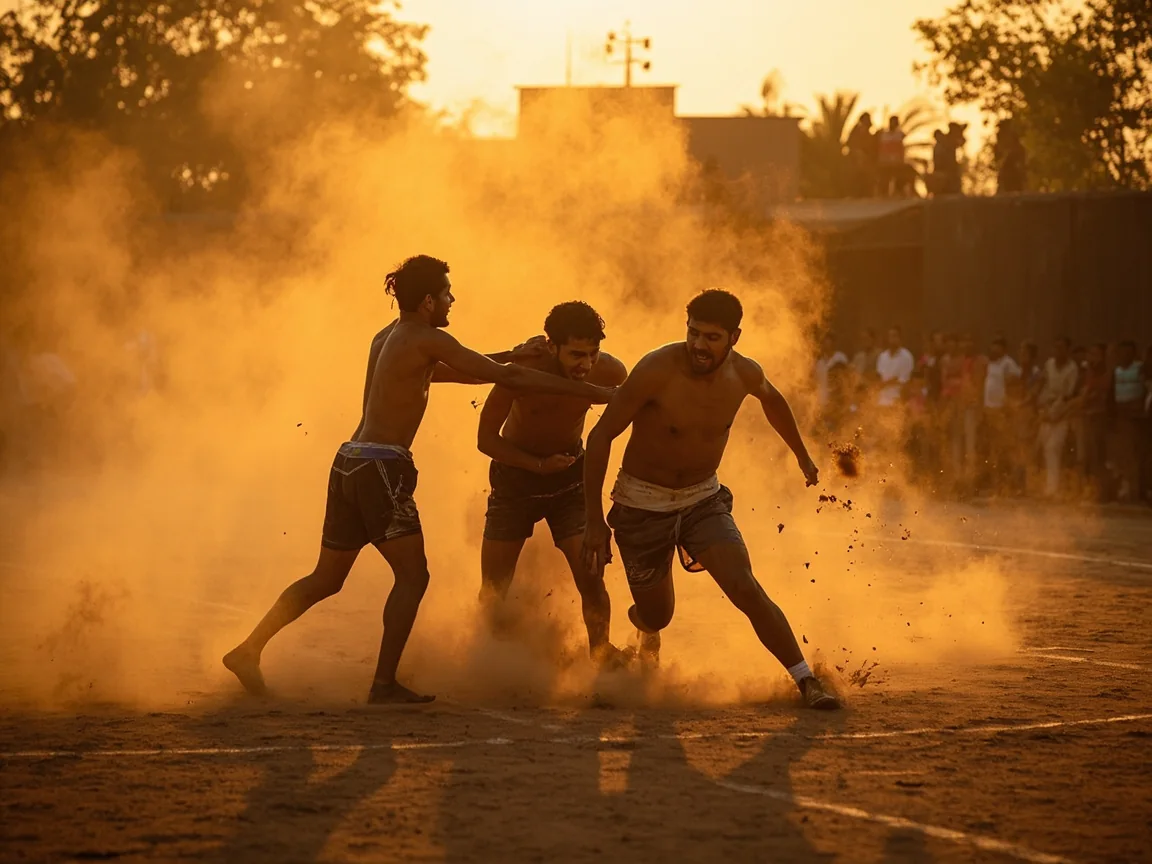
Kabaddi is the sport where the desk's chart-read matters most. Every raid is a contest between one raider and seven defenders, and every defensive chain is a contest between the chain and the raider's reading of it. The kabaddi desk reads both.
The raid read
A raid is a thirty-second contest, but the read starts before the raider crosses the baulk line. The kabaddi desk reads raids by touch point, escape route, breathing room and the way the raider's hand and foot choices matched the defensive chain. The read is built from the live broadcast and the working raid chart, not from a stat sheet.
A good raid read explains why a raider succeeded against a particular corner pairing, not just that he scored.
The defensive chain read
A defensive chain is only as strong as its weakest link. The chain read covers the link structure, the cover movement, the way the corners timed their advance and the way the chain reacted to a do-or-die raid. It is the part of kabaddi analysis that travels worst on a single number.
The desk writes the chain read as a paragraph, not a chart, because the chain's strength is in how the four corners and three covers worked together.
◆What a raid chart actually shows
A raid chart shows the touch point, the raider's escape route, the defensive chain's response, and the outcome. The kabaddi desk reads the chart as a paragraph, not a heat map. The paragraph is where the read lives; the chart is the evidence.
The corner read
A corner is the first and last line of defence. The corner read covers the corner's reach, ankle hold, thigh hold and the way he timed his advance against the raider's hand. The corner read also covers the way the corner's partner covered the back, because no corner defends alone in the modern game.
The corner read is most useful when the corner is paired with a chain that lets him play aggressively. A corner who is well-supported plays a different game from a corner who is not.
Fitness, recovery and the human read
A Pro Kabaddi match is a 40-minute contest, with the season running for almost six months. The fitness read covers the raider's gas tank in the second half, the way the team rotated, and the way the recovery cycle between matches shaped late-season form.
Kabaddi is also a sport of close family ties and noisy home crowds. The human read covers the family element, the home-ground advantage, and the way the dressing room handled a long losing streak.
PKL season structure - what the desk is watching
Pro KabaddiPKL Season 12
Match briefs, raid charts, defensive chain reads and a captain log every week.
October to MarchNational teamIndia senior team
Year-round tours, the World Cup cycle and the Asian Games calendar.
Calendar-drivenJunior teamIndia U-21 and age-group
The next-generation watch: who is pushing for a PKL starting spot, who is pushing for the senior team.
Year-roundState leaguesYuvaraj and state-level
The grassroots circuit that feeds the PKL auction, with notes on form and role.
Calendar-drivenInternational leaguesIran and beyond
The Iran Super League and the way Indian defenders and raiders perform against the strongest defensive chains in the world.
Calendar-drivenKabaddi cultureMat and community
The local mat, the school kabaddi circuit and the way the sport's cultural roots still feed the professional game.
Year-round How a kabaddi brief is built on this desk
1Raid and chain context
A read of both the raider's first-three raids and the defensive chain's structure. The brief starts with the basic contest, then moves to the specifics.
2Corner pairing
A close look at the corner pairing: ankle hold, thigh hold, the advance timing and the cover movement.
3Do-or-die read
A read of the do-or-die raids and the way the team handled the pressure moments.
4Captain log and verdict
A captain log with confidence labels and a short verdict on the contest, with the score read as the result of the raid-chain-corner story.